
Content SEO Strategies: How to Write SEO Content That Ranks and Converts
Content SEO has evolved dramatically in recent years, shifting from keyword-stuffed articles to sophisticated, user-focused content that demonstrates genuine expertise. With Google's emphasis on E-E-A-T (Experience, Expertise, Authoritativeness, and Trustworthiness), understanding how to write SEO content that satisfies both search engines and human readers has become more critical than ever.
Modern content SEO strategies require a delicate balance between technical optimization and authentic value creation. Whether you're a seasoned content marketer or just beginning your SEO journey, mastering these principles will help you create content that not only ranks well but also builds lasting relationships with your audience.
Understanding Modern Content SEO Fundamentals
Content SEO encompasses the strategic creation, optimization, and distribution of content designed to improve search engine rankings while providing genuine value to users. Unlike traditional SEO approaches that focused heavily on keyword density and backlink quantity, modern content SEO prioritizes user intent, content depth, and topical authority.

Strategic content creation process focusing on user intent and SEO optimization
The foundation of effective content SEO lies in understanding your audience's search behavior and creating content that addresses their specific needs at each stage of the customer journey. This approach requires comprehensive keyword research, competitor analysis, and a deep understanding of your target audience's pain points and preferences.
The Evolution of Search Intent
Search intent has become increasingly sophisticated, with search engines now capable of understanding context, nuance, and user motivation behind queries. This evolution means that successful content SEO strategies must address four primary types of search intent:
- Informational Intent: Users seeking knowledge or answers to specific questions
- Navigational Intent: Users looking for specific websites or pages
- Commercial Investigation: Users researching products or services before making decisions
- Transactional Intent: Users ready to make purchases or take specific actions
Understanding these intent types allows content creators to develop targeted strategies that align with user expectations and search engine algorithms. Each type requires different content approaches, from comprehensive guides for informational queries to detailed product comparisons for commercial investigation searches.
Mastering E-E-A-T: The Cornerstone of Quality Content
Google's E-E-A-T framework has become the gold standard for evaluating content quality. Understanding how to demonstrate Experience, Expertise, Authoritativeness, and Trustworthiness in your content is essential for achieving sustainable SEO success.
Experience: Showcasing Real-World Knowledge
Experience refers to the first-hand, life experience that content creators have with the topics they're writing about. This element of E-E-A-T is particularly important for topics that could impact users' health, financial stability, safety, or happiness (YMYL - Your Money or Your Life topics).
To demonstrate experience in your content:
- Share personal anecdotes and case studies from your work
- Include specific examples and real-world applications
- Reference your professional background and relevant experience
- Use original research, data, and insights from your industry work
- Provide behind-the-scenes looks at processes and methodologies
Expertise: Demonstrating Deep Knowledge
Expertise involves showcasing your deep knowledge and skill in specific subject areas. This goes beyond surface-level information to provide insights that only someone with specialized knowledge could offer.
Building expertise in your content requires:
- In-depth research using primary and secondary sources
- Integration of industry-specific terminology and concepts
- Citation of authoritative sources and studies
- Demonstration of understanding of complex topics
- Regular content updates to reflect current best practices
Authoritativeness: Building Industry Recognition
Authoritativeness is about being recognized as a go-to source in your field. This recognition comes from both your content quality and external validation from other authoritative sources.
To build authoritativeness:
- Consistently publish high-quality, original content
- Earn mentions and citations from other authoritative websites
- Participate in industry conferences and speaking engagements
- Collaborate with other recognized experts in your field
- Build a strong professional presence on relevant platforms
Trustworthiness: Establishing Credibility and Reliability
Trustworthiness encompasses the accuracy, honesty, and safety of your content and website. This element is crucial for building long-term relationships with both users and search engines.
Establishing trustworthiness involves:
- Fact-checking all claims and statistics
- Providing clear author information and credentials
- Maintaining transparent about affiliate relationships and sponsorships
- Regularly updating content to ensure accuracy
- Implementing strong website security measures
- Creating clear privacy policies and terms of service
Pro Tip: E-E-A-T Implementation
Focus on building E-E-A-T gradually and authentically. Search engines can detect artificial attempts to inflate authority, so concentrate on genuine expertise development and authentic relationship building within your industry.
Advanced Content SEO Writing Techniques
Learning how to write SEO content effectively requires mastering both the art of compelling storytelling and the science of search optimization. The most successful content seamlessly integrates optimization techniques without sacrificing readability or user experience.
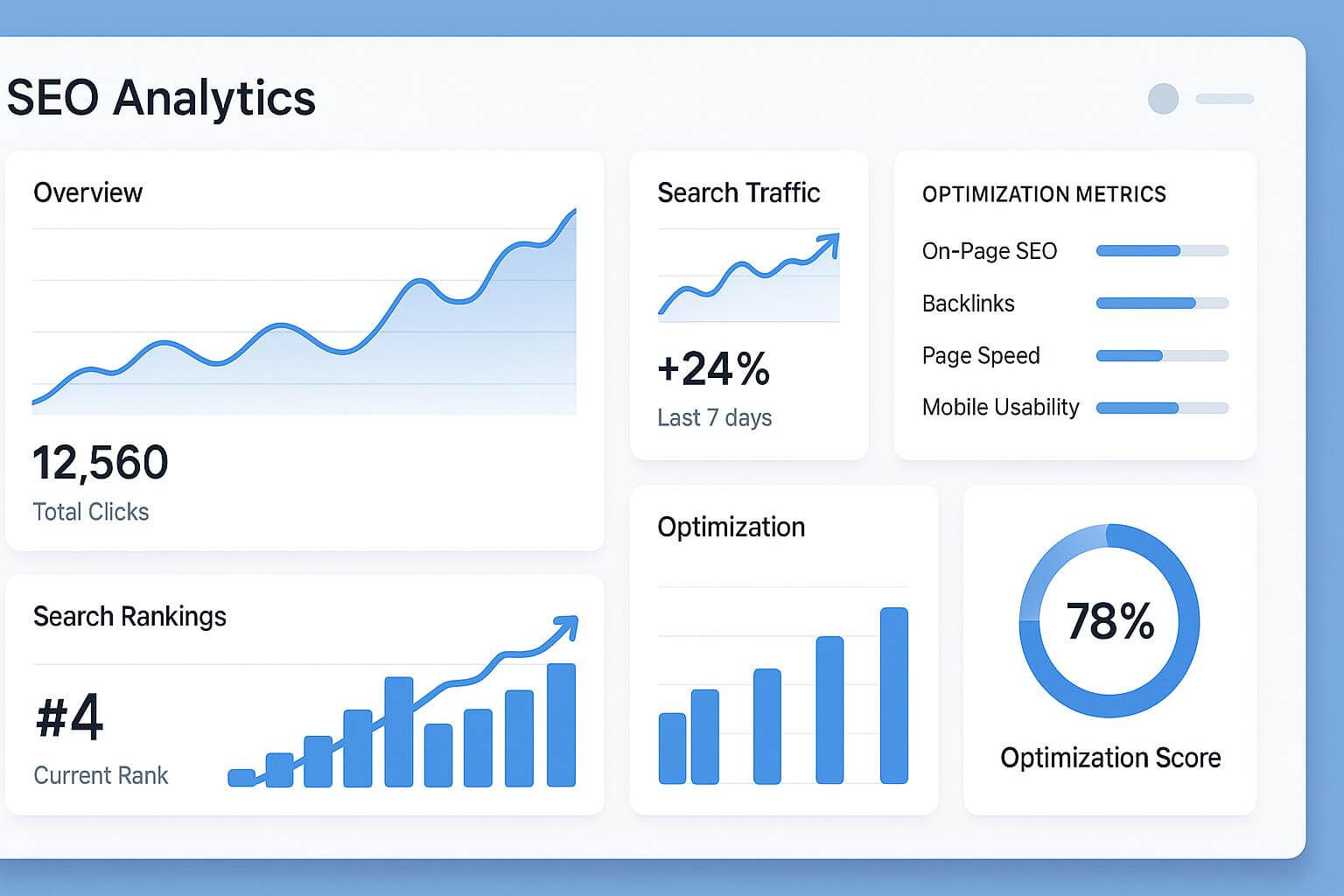
Analytics dashboard displaying content performance metrics and SEO trends
Semantic SEO and Topic Clusters
Modern content SEO relies heavily on semantic relationships between keywords and topics. Rather than focusing on individual keywords, successful content strategies build comprehensive topic clusters that demonstrate topical authority.
Implementing semantic SEO involves:
- Identifying primary and secondary keywords with related semantic variations
- Creating pillar content that covers broad topics comprehensively
- Developing cluster content that explores specific subtopics in detail
- Using natural language patterns and related terminology
- Incorporating entity-based optimization for people, places, and concepts
Content Structure and Readability Optimization
Well-structured content enhances both user experience and search engine understanding. Proper formatting helps search engines identify key information while making content more scannable for human readers.
Essential structural elements include:
- Compelling Headlines: Use numbers, power words, and clear value propositions
- Hierarchical Headings: Organize content with proper H1-H6 heading structure
- Short Paragraphs: Keep paragraphs to 2-4 sentences for better readability
- Bullet Points and Lists: Break up dense information into digestible chunks
- Visual Elements: Include images, videos, and infographics to enhance engagement
Advanced Keyword Integration Strategies
Effective keyword integration goes far beyond simple placement. Modern SEO requires sophisticated understanding of keyword relationships, search intent, and natural language patterns.
Best practices for keyword integration:
- Use primary keywords in titles, headers, and opening paragraphs naturally
- Incorporate long-tail variations throughout the content body
- Include related keywords and synonyms to build semantic richness
- Optimize for featured snippet opportunities with question-based formatting
- Balance keyword optimization with natural, conversational tone
Content Optimization for Different Content Types
Different types of content require specialized optimization approaches. Understanding these nuances helps create more effective content strategies across various formats and platforms.
Blog Posts and Articles
Long-form blog content remains one of the most effective formats for demonstrating expertise and building topical authority. Successful blog posts typically range from 1,500 to 3,000 words and provide comprehensive coverage of specific topics.
Blog optimization strategies:
- Start with compelling introductions that clearly state the value proposition
- Use data and statistics to support key points
- Include actionable tips and step-by-step instructions
- Add internal links to related content on your site
- End with clear calls-to-action that guide next steps
Product and Service Pages
Commercial pages require a different approach that balances SEO optimization with conversion optimization. These pages must provide comprehensive information while maintaining trust and encouraging action.
Key elements for commercial content:
- Detailed product descriptions with benefits and features
- Customer testimonials and social proof
- Technical specifications and comparison information
- Clear pricing and availability information
- Multiple conversion opportunities throughout the page
Landing Pages and Lead Magnets
Landing pages serve specific conversion goals while still needing to rank for relevant search terms. These pages require tight focus on user intent and clear value propositions.
Landing page optimization includes:
- Headlines that immediately communicate value
- Benefit-focused copy that addresses user pain points
- Minimal navigation to reduce distractions
- Trust signals like security badges and testimonials
- Mobile-optimized forms and conversion elements
Content Performance Measurement and Optimization
Successful content SEO requires continuous measurement and optimization based on performance data. Understanding which metrics matter most helps refine strategies and improve results over time.
Key Performance Indicators (KPIs)
Tracking the right metrics provides insights into content effectiveness and areas for improvement:
- Organic Traffic: The number of visitors from search engines
- Search Rankings: Position for target keywords across search results
- Click-Through Rates: Percentage of searchers who click on your results
- Bounce Rate: Percentage of visitors who leave without engaging
- Time on Page: Average duration visitors spend reading content
- Conversion Rates: Percentage of visitors who complete desired actions
- Social Shares: Amplification and engagement on social platforms
- Backlink Acquisition: Number and quality of earned external links
Content Refresh and Update Strategies
Regular content updates signal freshness to search engines and ensure accuracy for users. Developing systematic update schedules helps maintain content relevance and performance.
Update strategies include:
- Quarterly reviews of high-traffic content for accuracy
- Annual comprehensive updates for evergreen content
- Real-time updates for breaking news or industry changes
- Seasonal refreshes for time-sensitive content
- Performance-based updates for underperforming pages
Ready to Transform Your Content Strategy?
Implement these content SEO strategies to create content that ranks, engages, and converts. Start with our comprehensive SEO toolkit and technical optimization guides.
Explore Technical SEOCommon Content SEO Mistakes to Avoid
Understanding common pitfalls helps content creators avoid strategies that can harm their SEO performance. These mistakes often stem from outdated practices or misunderstanding of current search engine algorithms.
Over-Optimization Pitfalls
While optimization is important, over-optimization can trigger spam filters and negatively impact user experience. Common over-optimization mistakes include:
- Excessive keyword repetition that disrupts natural reading flow
- Forced keyword insertion in places where it doesn't make sense
- Neglecting user experience in favor of search engine preferences
- Creating content primarily for search engines rather than human readers
- Ignoring topical relevance in favor of keyword matching
Content Quality Issues
Quality problems can undermine even well-optimized content. Avoiding these issues is crucial for maintaining E-E-A-T standards:
- Publishing thin content that doesn't provide substantial value
- Copying or closely paraphrasing content from other sources
- Making claims without proper factual support or citations
- Neglecting to update outdated information regularly
- Focusing on quantity over quality in content production
Future-Proofing Your Content SEO Strategy
The SEO landscape continues evolving with advances in artificial intelligence, voice search, and user behavior changes. Successful content strategies must adapt to these trends while maintaining focus on fundamental quality principles.
Emerging Trends and Technologies
Several trends are shaping the future of content SEO:
- AI-Powered Content Analysis: Search engines increasingly use AI to evaluate content quality and relevance
- Voice Search Optimization: Growing importance of conversational queries and featured snippets
- Visual Search Growth: Increasing relevance of image and video optimization
- Core Web Vitals: Technical performance factors becoming ranking signals
- Entity-Based SEO: Focus on topic authority rather than individual keywords
Building Sustainable Content Systems
Long-term success requires systematic approaches to content creation and optimization:
- Develop content style guides that ensure consistency across all materials
- Create editorial calendars that align with business goals and seasonal trends
- Establish quality control processes for content review and approval
- Build content repurposing workflows to maximize value from each piece
- Implement content governance systems for large organizations
Content SEO success comes from combining technical expertise with genuine value creation. By focusing on user needs, demonstrating authentic expertise, and maintaining high quality standards, content creators can build sustainable organic traffic growth that withstands algorithm changes and competitive pressures.
The most effective content SEO strategies treat optimization as a means to better serve users rather than an end in itself. This user-first approach, combined with technical excellence and continuous improvement, creates the foundation for long-term SEO success in an increasingly competitive digital landscape.