
Technical SEO forms the invisible backbone of your website's search engine performance. While content and links capture attention, technical SEO ensures search engines can efficiently crawl, index, and understand your website. This comprehensive guide explores the fundamental technical elements that influence your site's visibility, with particular emphasis on speed optimization and site architecture.
Modern search engines prioritize websites that deliver exceptional user experiences through fast loading times, intuitive navigation, and seamless functionality across devices. Understanding and implementing technical SEO fundamentals creates the foundation upon which all other SEO efforts build their success.
Understanding Technical SEO Architecture
Technical SEO encompasses the behind-the-scenes elements that help search engines crawl, index, and rank your website effectively. Unlike content-focused SEO strategies, technical SEO deals with server configurations, code optimization, site structure, and performance metrics that directly impact user experience and search engine accessibility.
Site architecture serves as the blueprint for how search engines navigate and understand your website's content hierarchy. A well-structured website enables search engine crawlers to discover pages efficiently, understand content relationships, and distribute page authority throughout your site. This architectural foundation influences crawl budget allocation, indexing speed, and ultimately, your rankings in search results.
The relationship between technical SEO and user experience has become increasingly important as search engines evolve their ranking algorithms. Google's emphasis on Core Web Vitals and page experience signals demonstrates how technical performance directly correlates with search visibility. Websites that excel in technical SEO provide faster, more reliable experiences that satisfy both users and search engines.

Speed Optimization Fundamentals
Website speed optimization represents one of the most critical aspects of technical SEO, directly impacting user experience, bounce rates, and search engine rankings. Page loading speed affects every stage of the user journey, from initial discovery through conversion, making it essential for both SEO success and business performance.
Core Web Vitals and Performance Metrics
Google's Core Web Vitals provide standardized metrics for measuring user experience quality through three key performance indicators. Largest Contentful Paint (LCP) measures loading performance, targeting a loading time of 2.5 seconds or less for the largest visible element. First Input Delay (FID) evaluates interactivity, aiming for responses within 100 milliseconds of user interactions. Cumulative Layout Shift (CLS) assesses visual stability, striving for minimal unexpected layout changes during page loading.
These metrics reflect real-world user experiences and serve as ranking factors in Google's search algorithm. Websites that consistently achieve good Core Web Vitals scores demonstrate technical excellence and receive preferential treatment in search results. Monitoring these metrics through tools like Google PageSpeed Insights, Lighthouse, and Search Console provides actionable insights for optimization efforts.
Server Response Time Optimization
Server response time, measured as Time to First Byte (TTFB), represents the duration between a user's request and the server's initial response. Optimal TTFB should remain under 200 milliseconds, though anything under 500 milliseconds is acceptable. Slow server response times create cascading delays that affect all subsequent loading processes.
Several factors influence server response time, including hosting quality, server location, database queries, and server-side processing efficiency. Upgrading to faster hosting solutions, implementing content delivery networks (CDNs), optimizing database queries, and utilizing server-side caching significantly improve response times. Regular monitoring helps identify performance degradation before it impacts user experience or search rankings.
Image Optimization Strategies
Images typically account for the largest portion of webpage file sizes, making image optimization crucial for speed improvement. Modern image optimization involves format selection, compression techniques, responsive sizing, and lazy loading implementation. WebP and AVIF formats provide superior compression compared to traditional JPEG and PNG formats, reducing file sizes by 25-50% without noticeable quality loss.
Responsive images adapt to different screen sizes and resolutions, ensuring optimal loading performance across devices. The HTML picture element and srcset attribute enable browsers to select appropriate image versions based on device capabilities. Lazy loading defers image loading until they become visible in the viewport, significantly reducing initial page load times and bandwidth consumption.
CSS and JavaScript Optimization
Inefficient CSS and JavaScript code creates render-blocking resources that delay page rendering and interactivity. CSS optimization includes minification, combining stylesheets, removing unused styles, and implementing critical CSS techniques. Critical CSS involves inlining essential styles needed for above-the-fold content while deferring non-critical styles.
JavaScript optimization focuses on reducing bundle sizes, eliminating unused code, and implementing efficient loading strategies. Code splitting divides JavaScript into smaller chunks that load on-demand, reducing initial bundle sizes. Tree shaking removes unused code from final bundles, while modern bundling tools like Webpack and Rollup provide advanced optimization features.
Ready to Implement Advanced Technical Optimizations?
Discover overlooked technical SEO strategies that can give you a competitive edge
Explore Advanced TipsSite Architecture and Crawlability
Effective site architecture creates logical pathways for both users and search engines to navigate your content. A well-designed information architecture ensures important pages receive adequate crawl attention while maintaining clear content hierarchies that support topical authority development.
URL Structure and Navigation
Clean, descriptive URLs provide valuable context to search engines and users about page content and hierarchy. Effective URL structures follow consistent patterns, use relevant keywords naturally, and maintain reasonable lengths. Avoiding dynamic parameters, session IDs, and excessive subdirectories creates more crawlable and user-friendly URLs.
Navigation structure should reflect your site's content hierarchy while providing multiple pathways to important pages. Breadcrumb navigation helps users understand their location within your site structure while providing additional context to search engines. Internal linking strategies distribute page authority throughout your site while creating topic clusters that reinforce semantic relationships between related content.
XML Sitemaps and Robots.txt
XML sitemaps serve as roadmaps for search engine crawlers, listing your website's important pages along with metadata about their priority and update frequency. Effective sitemaps include only indexable pages, maintain reasonable sizes (under 50,000 URLs), and update automatically as content changes. Submitting sitemaps through Google Search Console and Bing Webmaster Tools ensures search engines discover your content efficiently.
The robots.txt file controls crawler access to different sections of your website, preventing crawling of unnecessary pages while preserving crawl budget for important content. Proper robots.txt configuration blocks access to admin areas, duplicate content, and low-value pages while ensuring critical content remains accessible. Regular auditing prevents accidental blocking of important pages or resources.
Mobile-First Indexing Considerations
Google's mobile-first indexing means the mobile version of your website serves as the primary source for ranking evaluation. Ensuring mobile and desktop versions contain equivalent content, structured data, and metadata prevents indexing issues. Responsive design approaches provide consistent experiences across devices while maintaining single URL structures that simplify crawling and indexing.
Mobile optimization extends beyond responsive design to include touch-friendly navigation, readable font sizes, and appropriate spacing between interactive elements. Mobile page speed often differs significantly from desktop performance, requiring device-specific optimization strategies and monitoring approaches.
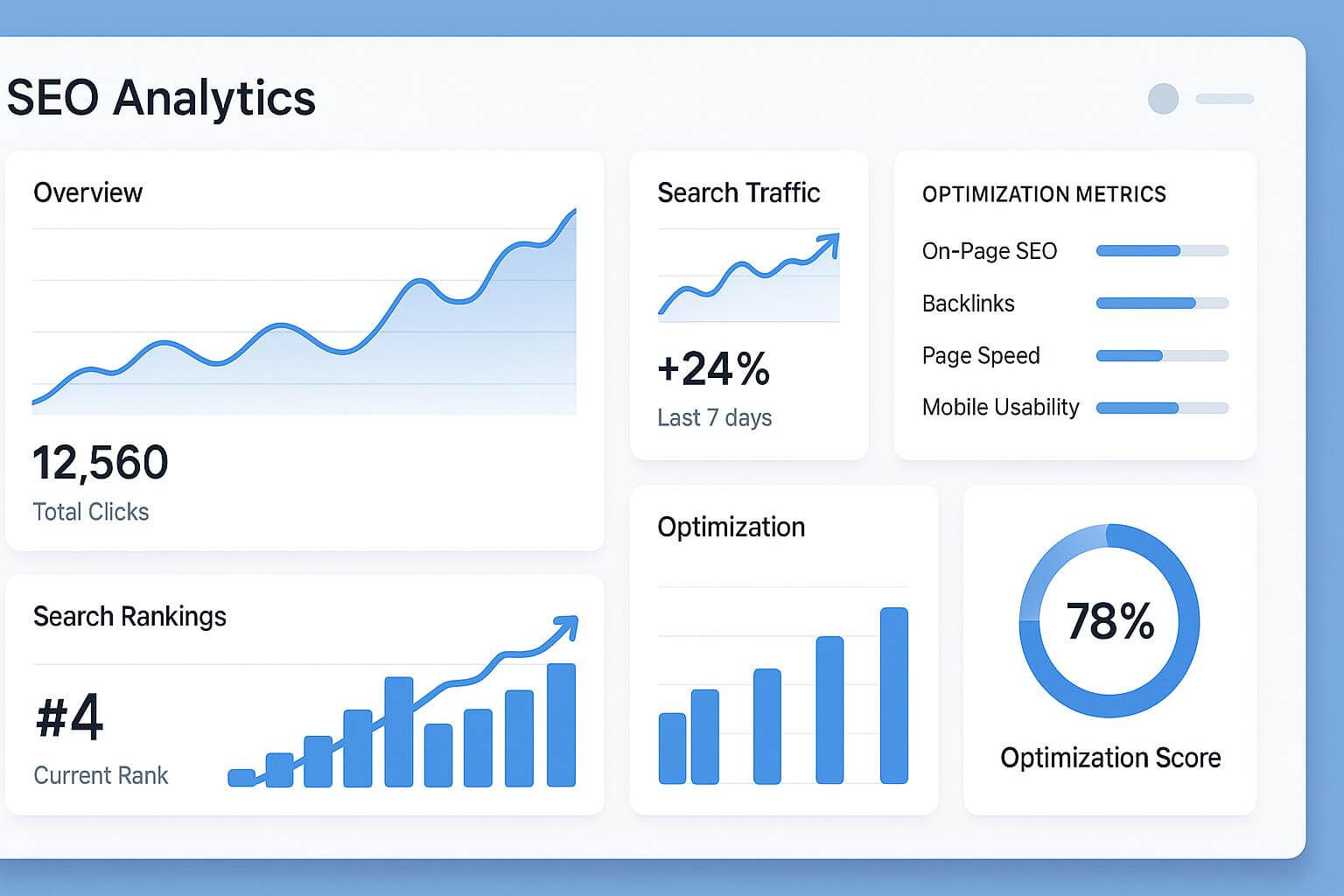
Technical SEO Monitoring and Maintenance
Ongoing monitoring ensures technical SEO implementations continue delivering optimal performance as your website evolves. Regular auditing identifies emerging issues before they impact search visibility, while performance tracking validates optimization efforts and guides future improvements.
Performance Monitoring Tools
Google Search Console provides essential insights into crawling errors, indexing status, and Core Web Vitals performance. The URL Inspection tool reveals how Google perceives individual pages, while the Coverage report identifies indexing issues across your entire site. Regular monitoring of these reports helps maintain optimal technical health.
Third-party tools like Screaming Frog, Ahrefs, and SEMrush offer comprehensive technical auditing capabilities that complement Google's native tools. These platforms provide detailed crawl analysis, broken link detection, and performance benchmarking that supports proactive technical SEO management.
Common Technical Issues and Solutions
Crawl errors, including 404 errors, server errors, and redirect chains, can significantly impact search engine accessibility. Regular monitoring and prompt resolution of these issues maintains crawl efficiency and prevents negative user experiences. Implementing proper 301 redirects for moved content and maintaining updated internal link structures prevents broken link accumulation.
Duplicate content issues arise from technical problems like HTTP/HTTPS variations, trailing slash inconsistencies, and parameter-based URLs. Canonical tags, proper redirects, and URL parameter handling in Search Console resolve most duplicate content issues while preserving page authority consolidation.
Schema markup implementation enhances search engine understanding of your content while enabling rich snippet appearances in search results. Structured data testing tools validate markup implementation, while monitoring rich snippet performance provides insights into enhancement opportunities.
Advanced Technical SEO Strategies
Beyond fundamental optimization, advanced technical SEO strategies provide competitive advantages through sophisticated implementation approaches. These strategies require deeper technical knowledge but deliver substantial performance improvements and search visibility benefits.
Progressive Web App (PWA) Implementation
Progressive Web Apps combine the best features of web and mobile applications, providing app-like experiences through web browsers. PWA implementation improves loading performance through service workers, enables offline functionality, and supports push notifications. These enhancements create superior user experiences that positively influence engagement metrics and search rankings.
Service workers enable advanced caching strategies that dramatically improve repeat visit performance. Implementing effective caching policies for different content types ensures optimal balance between freshness and performance. PWA features like background sync and offline functionality create resilient user experiences that maintain engagement even during connectivity issues.
International SEO Technical Considerations
International websites require sophisticated technical implementations to serve appropriate content to global audiences. Hreflang attributes communicate language and regional targeting to search engines, preventing duplicate content issues across international versions. Proper hreflang implementation requires careful attention to language codes, regional variations, and bidirectional referencing.
International site architecture choices include subdirectories, subdomains, and country-code top-level domains (ccTLDs). Each approach offers distinct advantages and challenges regarding technical implementation, user experience, and search engine optimization. Geographic server distribution through CDNs improves loading performance for international audiences while supporting local search visibility.
Security and HTTPS Implementation
Website security directly impacts both user trust and search engine rankings. HTTPS implementation provides encryption for data transmission while serving as a confirmed ranking factor in Google's algorithm. Proper SSL certificate installation, HTTP to HTTPS redirects, and mixed content resolution ensure secure, properly functioning websites.
Security headers like Content Security Policy (CSP), X-Frame-Options, and X-Content-Type-Options provide additional protection against common web vulnerabilities. These headers demonstrate security consciousness while protecting users from malicious attacks that could compromise website integrity and user data.
Future-Proofing Your Technical SEO
Technical SEO continues evolving as search engines advance their capabilities and user expectations change. Staying ahead of emerging trends and preparing for future developments ensures sustained search performance and competitive advantages.
Artificial intelligence and machine learning increasingly influence search algorithms, making user experience signals more important than ever. Technical implementations that prioritize user satisfaction, accessibility, and performance align with these algorithmic trends while future-proofing SEO investments.
Emerging technologies like voice search, visual search, and augmented reality create new technical requirements and optimization opportunities. Preparing for these developments through structured data implementation, image optimization, and mobile-first design approaches positions websites for future search landscape changes.
Regular technical SEO auditing, performance monitoring, and optimization iteration ensure your website maintains competitive technical performance. Implementing these fundamental strategies creates the foundation for advanced optimization techniques while supporting long-term search visibility and user satisfaction goals.
Need More SEO Guidance?
Explore our comprehensive SEO resource library for strategies across all optimization areas
Visit Homepage